
Versioning Machine Learning Models

As Machine Learning models are developed and deployed, it becomes crucial to version and track them effectively. In this article, we will discuss what ML model versioning is, why it is important, tools to enable it, challenges and best practices.
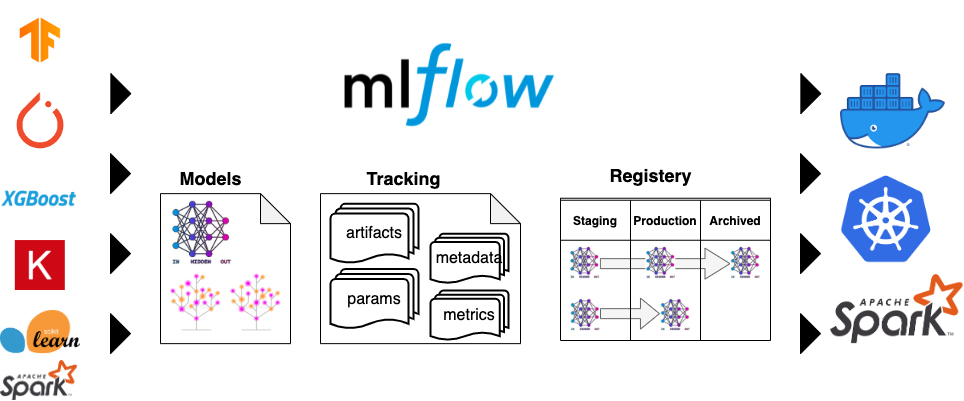
What is ML Model Versioning?
ML model versioning refers to the process of tracking different versions of ML models during development and after deployment. It involves assigning unique identifiers to model versions and maintaining metadata like run logs, performance metrics, hyperparameters, code changes etc. for each version.
Why is ML Model Versioning Needed?
There are several key reasons why ML model versioning is essential:
Reproducibility - Versioning allows replicating and rebuilding past model versions, enabling reproducibility.
Rollbacks - If a new model version has issues, versioning enables rolling back to a previous well-performing one.
Compliance - In regulated industries, versioning provides auditing trails for compliance.
Monitoring - Versioning enables tracking model performance over time to monitor for concept drift.
Experimentation - Versioning helps try out model ideas and changes by maintaining different variants.
Collaboration - In teams, versioning enables discovering and reusing work done by others.
In essence, versioning brings rigor, organization and auditability to the complex ML model development process.
How to implement Model versioning ?
Unique identifiers - Models are assigned version numbers, hashes or GUIDs to uniquely identify each version. For example, model-v1, model-v2 or using hashes model-f234ac101.
Versioning code - The model training code is version controlled using git. Any changes to code triggers a new model version.
Versioning configurations - Hyperparameters, hardware settings and other configs are saved with the model version. These affect model behavior.
Versioning data - The data used for training is also versioned, either internally or via external data versioning tools. New data -> new model.
Versioning dependencies - Any libraries, packages or dependencies are version pinned and stored. This enables reproducing old model environments.
Versioning model files - The actual model artifacts like saved weights, JSON configs, etc. are persisted separately for each version.
Metadata capture - Metadata like run logs, performance metrics, author info are logged automatically.
Model registry - A catalog or registry that stores model version info and metadata in a structured format. Enables search and retrieval.
Pipelines - ML pipelines automate triggering new model versions on code or data changes. They build, test and register new model versions.
Deployment config - Application configs point to specific model versions to serve. Can shift traffic across versions.
Tools for ML Model Versioning
Some popular open-source tools for enabling model versioning include:
MLflow - Provides model registry, packaging and tools for the whole ML lifecycle.
DVC - Built on git, version controls datasets and model files.
Pachyderm - Provides a complete ML pipeline platform with versioning.
Commercial tools like neptune.ai also offer advanced versioning capabilities. Integrating these tools into the model development process makes versioning smoother.
Challenges and Limitations
However, ML model versioning also poses three major challenges:
Data Drift: ML models are highly dependent on the quality and distribution of training data. Changes in the underlying data distribution over time can lead to model degradation. Versioning models without considering data changes may result in ineffective models.
Large Model Sizes: Large models with numerous parameters can be challenging to version efficiently. Storing and managing multiple versions of large models can consume significant storage resources.
Complexity of Environments: ML models often require specific software versions, hardware configurations, and dependencies. Replicating the exact environment for a specific model version can be complex and error-prone.
Best Practices for ML Model Versioning
Based on the above discussion, here are some best practices to effectively version ML models:
Assign unique IDs to each model version. Use semantic versions like X.Y.Z.
Store model files in centralized repositories like S3, git.
Track key metadata automatically - hyperparameters, metrics, code changes etc.
Log experiments extensively during development for reproducibility.
Implement CI/CD pipelines that build versions from code and data.
Use rollback mechanisms in case of problems with new versions.
Periodically audit and clean up old model versions.
Build a model registry or catalog for easy discovery of versions.
Conclusion
Versioning is a critical discipline for production ML. With the growth of MLOps, it is receiving much-needed attention. Organizations need to choose tools and build processes focused on versioning and reproducibility to minimize technical debt and enable collaboration. Done right, it unlocks rigor at scale in ML application development.